
COURAGE TRANSFORMS ANGER — Why the Eagle Drinks Lion’s Milk

Updated: 23 hours ago
Imagine being handed a glass and told that it contains the cure for anger. You might expect a sedative, some ancient herbal remedy, perhaps a comforting lie. Then you are told where it came from: a lioness. Someone would have had to approach a mother lion and steal her milk.
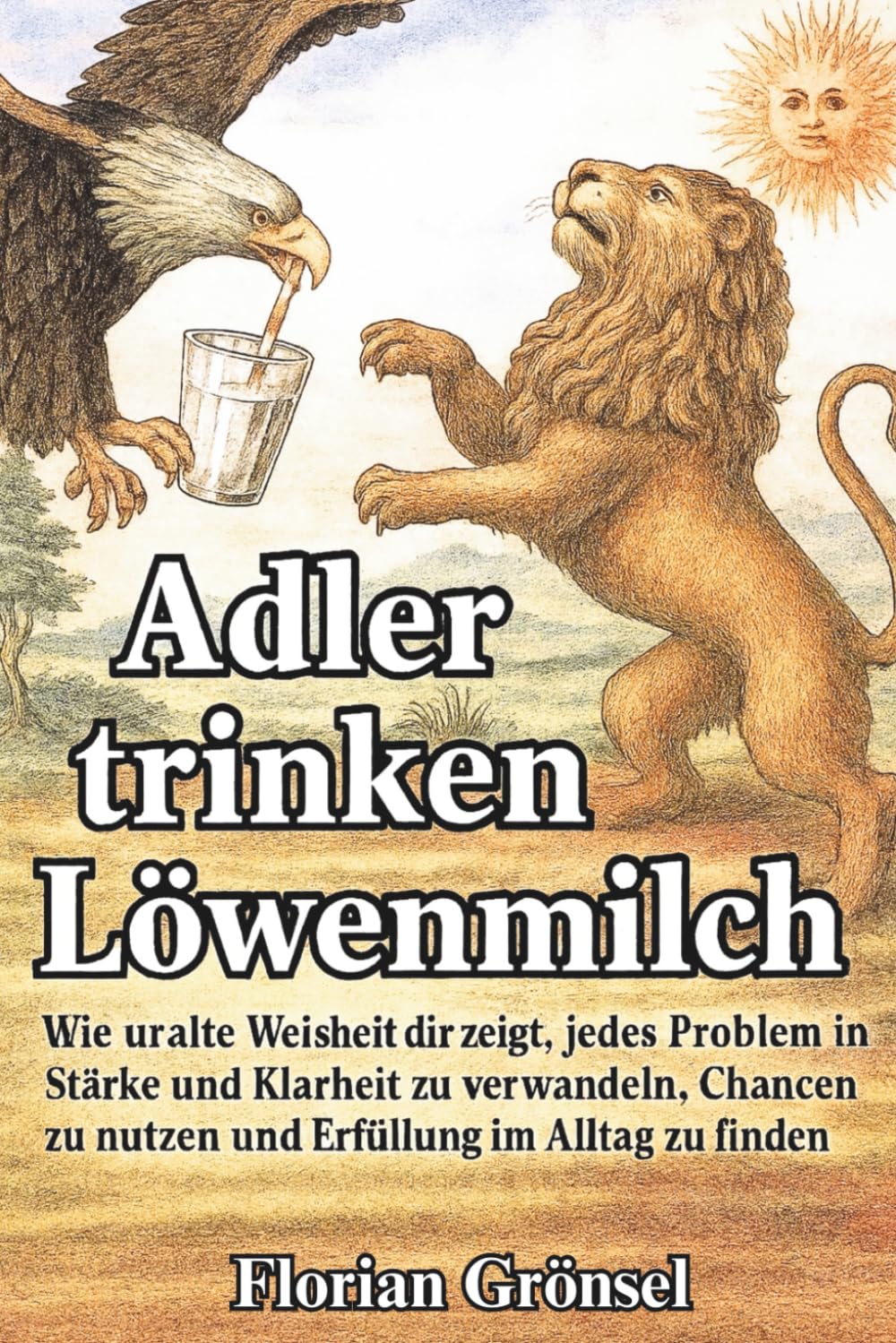
The image is absurd. It is also the opening provocation of Chapter Three of my book, When Eagles Drink Lion’s Milk. The milk is not a substance, and the lioness is not a challenge anyone should attempt. The question is what such an impossible task exposes: What would it take to face fear without disguising it as anger?
The Lion We Mistake for an Enemy
Anger moves faster than reflection. An accusation, an insult, a betrayal: suddenly a single event seems to fill the entire world. We prepare our defense before hearing the whole question. We raise our voices, retreat into injured silence, or replay an argument a hundred times when nobody else is in the room.
I describe anger as a lion because a lion is both dangerous and magnificent. The danger does not erase its power. Anger, too, may contain information. It can signal a genuine injustice, a violated boundary, or something we are afraid to lose. At other times it can conceal shame, injured pride, or helplessness. But a feeling is not the same thing as a verdict. It tells us something matters; it does not tell us, by itself, what we ought to do.
That distinction makes room for an uncomfortable truth. You can be right about an injustice and wrong about the action you take next. You can also appear wonderfully calm while remaining too frightened to say the one necessary word: no. Neither the absence nor the display of anger proves courage.
The Lion Who Thought He Had None
In L. Frank Baum’s The Wonderful Wizard of Oz, the Cowardly Lion searches for courage as though it were an object missing from his body. The irony is that his own conduct repeatedly challenges his judgment of himself. He is frightened, and he acts anyway.
Perhaps that is why his story has lasted. Courage is not the absence of fear. Often, without fear there would be nothing to overcome. But courage is not recklessness, either. Leaving danger, asking for help, or refusing a demand can require more of it than a spectacular gesture performed for applause.
The difficulty is not to make fear disappear. It is to stop giving fear the final vote.
A Half-Pipe and the Edge of a Decision
I still remember standing at the top of a half-pipe as a boy. My skateboard was beneath my feet; the drop opened in front of me. My friends and my father called for me to try. My heart was racing.
I went. The first attempt succeeded. I was entirely focused, inside the movement rather than trapped in the argument about whether to make it. On the second attempt, I fell hard.
If I turned that memory into a tidy story about bravery always being rewarded, I would miss the point. The fall belongs to the lesson as much as the first attempt. Fearlessness would not have prevented it. Courage does not make us invulnerable. It makes it possible to decide while recognizing that the outcome remains uncertain.
There is a quiet difference between courage and bravado. One pays attention to danger and acts with judgment. The other tries to silence doubt by making more noise.
Courage, the Heart, and a Dangerous Shortcut
The English word courage comes through French from the Latin cor, meaning “heart.” That history gives the metaphor a natural home. To be courageous is not merely to force an action; it can mean allowing concern, attention, and human feeling to shape it.
In the German original, I also play with cura, the Latin word associated with care or concern. It does not share the same etymological root as cor. Their resemblance is poetic, not a secret linguistic proof of a cure. And when I say that courage heals anger, I do not mean that it is a medical or psychological treatment. This is a philosophical claim about choosing a response, not a promise that difficult emotions can be switched off.
The useful question remains: what happens when the heart gets a say before the wounded ego demands its revenge?
The Alchemy of What Happens Next
Alchemy offers an image for this work. Its historical practices and texts cannot be reduced to modern psychology, but their language of transformation can illuminate an inner conflict. Anger is raw material. It is not already gold; neither is it worthless simply because it burns. Courage is the willingness to examine the material, distinguish what is justified from what is exaggerated, and choose what to make of it.
In daily life, that may look remarkably ordinary. Telling the truth without humiliating someone. Setting a boundary that is clear rather than cruel. Admitting a mistake even while pride is searching for another culprit. Sometimes it means staying in a difficult conversation. Sometimes it means leaving a dangerous situation and seeking support. No single behavior is always brave; context and consequences matter.
Anger demands an immediate answer. Courage creates the space to find a better one.
What the Lion’s Milk Really Is
Perhaps you were expecting a technique that would make anger disappear. One sentence to repeat until the hurt was gone. But that would be another fantasy about an effortless cure.
You do not need to steal milk from a lioness. You do not need to prove fearlessness to anyone. Sometimes the essential act is almost invisible: you notice the anger; you recognize the fear or the boundary beneath it; and you refuse to let the first impulse make the decision for you.
That is lion’s milk as I understand it: not the disappearance of the wild animal, but the strength to stand before it without becoming wild yourself.
This essay expands Chapter Three, The Lion’s Milk: Turning Rage into Courage, from When Eagles Drink Lion’s Milk: Finding Courage, Clarity, and Meaning in Everyday Life. The book continues the inquiry through twenty-two personal and philosophical reflections on grief, judgment, silence, self-knowledge, and responsibility.
This essay opens one door. The complete English book continues through twenty-two reflections on fear, courage, grief, perception and the choices that shape everyday life.
Read the complete book: Kindle edition on Amazon · Paperback edition on Amazon



Comments