
SELF — Who Remains When You Are No Longer the Same Person?
Jung sought a form of psychological wholeness. The Upanishads spoke of Atman. Early Buddhist texts refuse to grant changing experiences the status of a self. Three answers that cannot simply be reconciled — and precisely for that reason reveal something essential about identity.
You open a box of old letters. In one of them, you make a promise with a confidence you can scarcely understand today. Back then you were certain you were a particular kind of person: someone with firm principles, a clear plan for life, perhaps a love that would never end.
Now you read the words and recognise the sender. It is your handwriting. Your story. Your decision. And yet part of you wants to protest: I no longer think that way.
Who wrote the letter? You did. Who would never write it today? You, too.
Identity is a strange promise to remain the same while almost everything about us is capable of changing. We speak of the self as though a finished object were hidden somewhere inside us. We need only find it, uncover it, and finally live without a disguise. But the closer we look, the less comfortable the question becomes: are we searching for something real — or merely naming the permanence we long for?
The Person Who No Longer Recognises Himself
Consider an ordinary case, with no pathology involved. Someone once believed that professional success was the most important thing in life. A few years later, their attention belongs chiefly to a child, an ill relative, or a task they would never once have imagined. Their values have changed. They remember their former life, but it no longer attracts them.
Was their earlier self false? Is the new one finally true?
We could quickly turn this into a story of awakening: first they lived in alienation, and then they became authentic. The trouble is that today's self-image may also prove too narrow tomorrow. Perhaps this is not the revelation of a concealed essence, but a continuing process of reconsideration.
Before going further, we must distinguish what we are talking about. Our everyday self-image comprises the ideas and stories we hold about ourselves. Personal identity concerns, among other things, why we regard ourselves as the same person across time. The psychological Self in C. G. Jung's writings is a particular theoretical concept. And Atman, in Indian traditions, cannot simply be translated into the terms of a modern personality profile.
Four different problems. One familiar word: self.
Jung: The Ego Is Not the Whole House
Carl Gustav Jung distinguished the ego, as the centre of consciousness, from the Self, a more encompassing principle of order and wholeness within his analytical psychology. In Aion: Researches into the Phenomenology of the Self, included in Volume 9, Part II of his Collected Works, he investigates the relationship between ego, Self, and unconscious contents. The International Association for Analytical Psychology discusses the distinction in relation to his work.
In Jung's model, a person can know a great deal about themselves and still fail to acknowledge important parts of their experience. They may defend their identity as an independent thinker while overlooking how badly they need admiration. They may think of themselves as exceptionally helpful while suppressing the resentment they feel whenever their help is taken for granted.
None of this means that a mysterious archetype is hiding behind every weakness. The model offers a way of looking, not a measurement of an invisible substance. Yet its provocation is considerable: the conscious ego may not be the most reliable witness to what moves it.
Jung associated the movement towards psychological wholeness with individuation: engaging with contradictions, unconscious aspects of the psyche, and relationships between different dimensions of experience. That aim is not identical to becoming ever more agreeable, successful, or morally superior.
Indeed, a supposedly complete self-knowledge that permitted no further correction would create a new problem. The person would possess an image of their own wholeness — and mistake that image for the whole.
A Radically Different Direction: Atman
In the Brihadaranyaka Upanishad 2.4.5, Yajnavalkya speaks to Maitreyi about the Self, for whose sake, in the text's argument, relationships and possessions also become meaningful. The passage belongs to a religious-philosophical setting in which Atman signifies far more than individual preferences or autobiographical memories.
To translate this notion too quickly into modern psychology is to diminish it. Here Atman can be understood as a fundamental point of reference for knowing — emphatically not the checklist of character traits a person might tick on a personality questionnaire.
The question shifts. It is no longer simply Which qualities make me who I am? It becomes: What makes it possible for anything to appear to me as “I” or “mine” in the first place?
We have entered a different intellectual world from Jung's. A psychological account of conscious and unconscious life cannot simply be replaced by a metaphysical or soteriological teaching. Similarity of terminology is no proof of historical identity.
We may compare them. We must not quietly convert one into the other.
And Then Early Buddhism Objects
The contrast grows sharper with a text from early Buddhism. In Saṃyutta Nikāya 22.59, the Anattalakkhaṇa Sutta, five aggregates of experience are examined: bodily form, feeling, perception, volitional formations, and consciousness.
Among other things, the argument asks whether we can completely command these changing processes. Can we order our bodies never to suffer? Can we reliably choose which feeling will appear next? Can we hold every movement of consciousness in place?
The discourse challenges the claim that these impermanent, not-fully-controllable processes constitute a self that is permanently ours to command. In a famous recurring formulation, what changes should not simply be appropriated as “mine”, “I”, or “my self”.
This is not the trivial claim that nobody experiences anything. Experience is precisely the starting point of the inquiry: the text examines the relationship between what is experienced and what we claim to own. Buddhist interpreters differ in how strongly to frame anatta as a comprehensive metaphysical denial of every conceivable self. Our comparison therefore stays with the argument made by the discourse itself.
Now the disagreement lies in full view. Some traditions investigate a fundamental relation to the Self; another asks us not to turn changing experiences into the possession of one. Jung develops a psychological concept of wholeness.
To insist that all these teachers were merely expressing the same truth in different languages is to rob their ideas of their force.
The Difficult Objection: Without a Self, Who Is Supposed to Change?
At this point, someone might reasonably object: if my self-image is only a story, and much about me is beyond my control, what becomes of responsibility? Who apologises for a mistake? Who keeps a promise?
This is a serious objection to every easy slogan about “dissolving the ego”. The fact that a self-image can change does not cancel an obligation. A person may recognise that their impulses have causes and still take responsibility for their actions. Our social rules, relationships, and legal identities do not have to wait until philosophy has proved the existence of an eternal soul.
But the reverse also matters: the usefulness of an identity does not constitute metaphysical proof. Our need for a name and a history explains why a concept of personal identity is practically important. It does not show that an unchanging substance must exist behind it.
Perhaps part of the dispute comes from mixing up levels of explanation. The practical “I” who acts is not automatically the metaphysical Atman. A psychological idea of wholeness is not the same as a Buddhist account of non-self.
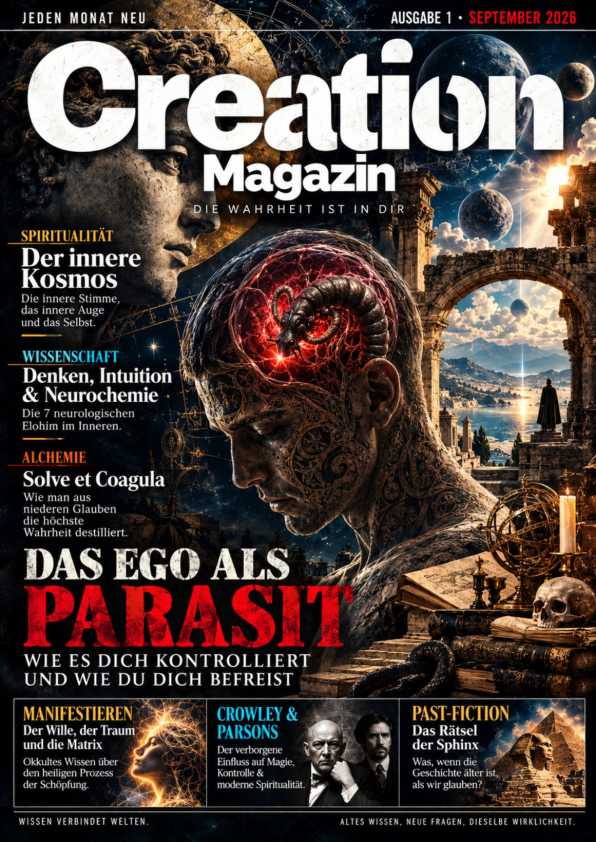
CREATION: Three Tests for the Story You Tell About Yourself
Here our own interpretation begins. What follows is not a historical teaching of Jung, a quotation from the Upanishads, or a Buddhist doctrine. It is a method for reflection.
The origins test. Which statements about me have I accepted because other people repeated them often enough? “You're the quiet one.” “You haven't got the talent for art.” “You're always the sensible one.” Perhaps these sentences describe past behaviour. Perhaps they are also preventing something new.
The contradiction test. What observation about me does not fit my favourite story? Someone who prides themselves on independence might ask whose approval they secretly await. Someone who celebrates their openness might examine the criticism they cannot bear.
The responsibility test. What concrete decision does my life require of me now, even if I have no final answer to “Who am I?” An apology. A boundary. The decision to learn. A promise made deliberately.
The third test matters most. Self-knowledge does not become deeper by remaining in front of a mirror forever. Sooner or later, an insight must show what action it changes.
The Mistake of the Final Revelation
There is something seductive about the idea that one day we will have stripped away every layer: persona, conditioning, ego, habit. Underneath it all, the true self will emerge like a statue brushed clean of dust.
But what if that image is itself a trap?
Every discovery can become another role. Someone who believes they have finally found their “true self” may suddenly be unable to question it. They defend the new image with exactly the rigidity with which they once defended the old one. Their hunger for authenticity turns into an inability to change.
CREATION therefore proposes a more cautious idea: perhaps the self is not only what we discover within ourselves, but also what we are willing to correct about ourselves. This is a contemporary philosophical interpretation, not a definition Jung, Yajnavalkya, and the Buddha agreed upon.
Return to the box of old letters. You need not disown the person you were. Perhaps they had good reasons for their decisions. Perhaps they were mistaken. Both possibilities belong to your story.
You may acknowledge the signature on the letter without having to endorse every sentence in it today.
Identity need not be a life sentence handed down by an earlier answer. It can be the responsibility to answer a new question truthfully.
Historical Sources and Further Reading
• C. G. Jung: Aion: Researches into the Phenomenology of the Self, Collected Works, Vol. 9, Part II; overview of Jung's work from the International Association for Analytical Psychology (IAAP). This is a psychological model of ego, Self, and individuation.
• Brihadaranyaka Upanishad 2.4.5: Yajnavalkya's dialogue with Maitreyi; original passage and translations. This is a religious-philosophical account of Atman, not modern personality psychology.
• Saṃyutta Nikāya 22.59: Anattalakkhaṇa Sutta, translated by Bhikkhu Sujato at SuttaCentral. An early Buddhist examination of the five aggregates of experience.
• International Association for Analytical Psychology: “The Self”. A specialist introduction to Jung's concept of the Self.
Editorial distinction: The three reflection tests, the comparison between traditions, and the proposed account of identity as openness to correction are interpretations developed by CREATION. They are not attributed to Jung, Yajnavalkya, or the Buddha as a shared doctrine. The introductory scenes are illustrative, not biographical reports.


Comments