
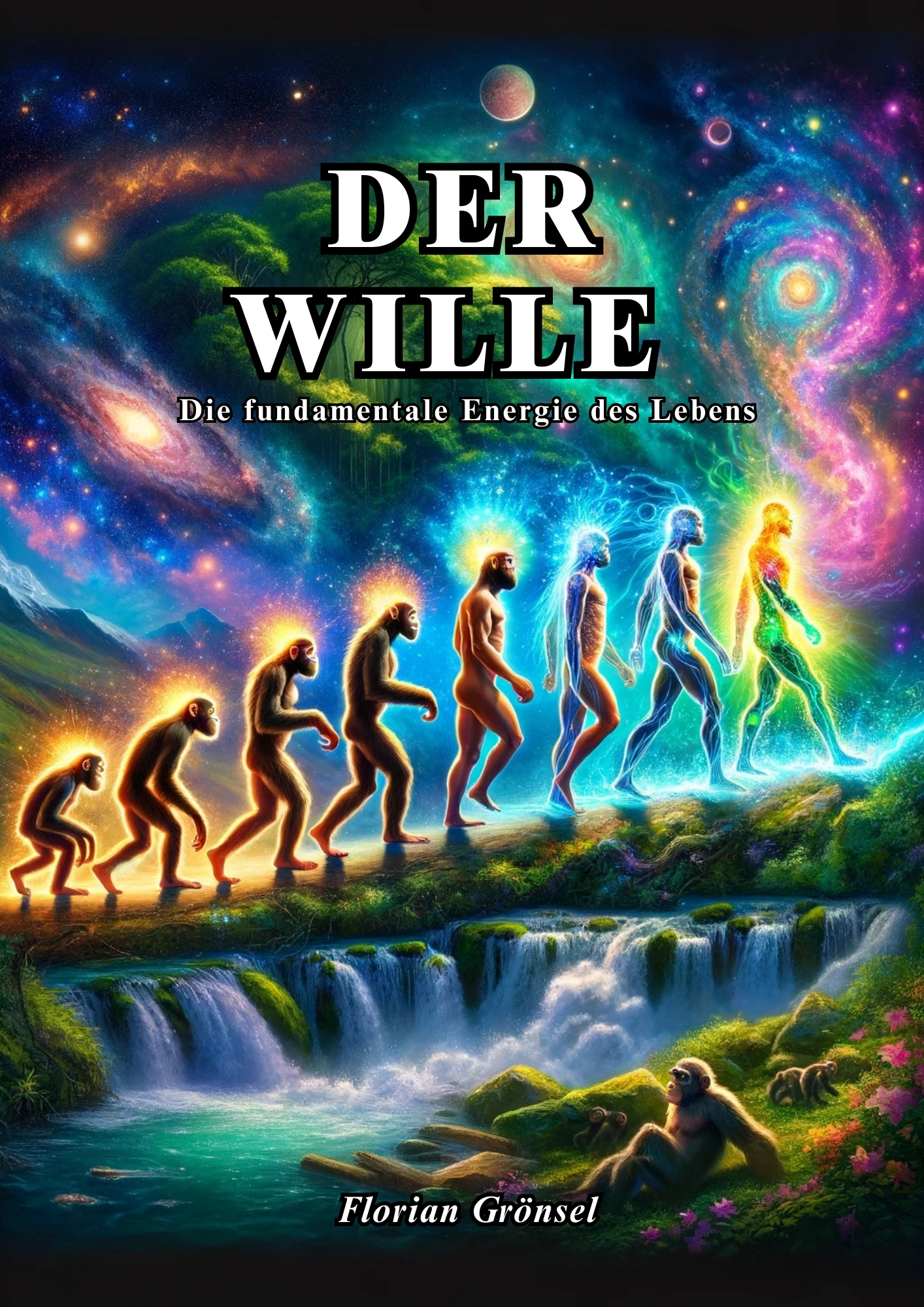
WILL — The Command Whose Author You Do Not Know
Schopenhauer called will a fundamental feature of reality. Nietzsche broke it apart into thinking, feeling, commanding and obeying. Crowley sought in it the direction of a life. But who is actually acting when you say, “I will”?
On the table lies a task that has to be finished today. You know why it matters. You have enough time. You have decided to begin.
And yet you reach for your phone.
You open a message, read something else, and for a moment forget about getting started. Then you hear yourself say: But I really do want to do this.
A remarkable sentence. Apparently there is a gap between the will you declare and the behaviour you display. Who, exactly, inhabits that gap?
Perhaps “the will” is not a force we simply possess. Perhaps it names a conflict we too readily conceal beneath a single word. You can issue yourself a command. But what guarantees that the person expected to obey it will do so?
One Word for Several Worlds
In everyday speech, will sometimes means an intention: I intend to come tomorrow. Sometimes a desire: I want recognition. Sometimes perseverance: I'll keep going despite the difficulties. In religious and philosophical writing, the same word may signify something altogether different — the ground of the world, a moral decision, a cosmic order, or a binding direction in life.
Mix these meanings and a text may sound mysterious while becoming less precise.
CREATION, in particular, must be more exacting than an ordinary motivational quotation. The most interesting question does not arise because three thinkers happen to use the word will. It arises because they mean different things by it and offer different explanations for a familiar human experience.
We therefore call three witnesses: Schopenhauer, Nietzsche, and Crowley. None is granted the final word in advance.
Schopenhauer: You See the Impulse, Not Its Origin
In The World as Will and Representation, Arthur Schopenhauer developed a metaphysics in which “will” is not merely conscious intention. In Book II, especially § 18, he connects our experience of our own bodies with will, then extends the concept beyond individual human decisions.
This is a philosophical system, not a natural-scientific model experimentally proving that every living process is made from one identical substance. The Stanford Encyclopedia of Philosophy offers a scholarly introduction to his thought.
In On the Freedom of the Will, Schopenhauer also challenges the familiar idea of a completely independent choice. A person may be able to do what they will; that does not settle whether, in exactly the same circumstances, they could have willed something different.
This is an affront to the image we have of ourselves. We like to tell stories about our decisions as though they emerged in an untouched room. Yet desires have histories. Character, experience, expectations, and circumstances influence which possibilities appear attractive to us.
Schopenhauer's answer is not thereby automatically proved. But his question strikes home: when you follow your strongest desire, are you acting freely — or merely consistently?
Nietzsche Dismantles the Commander's Throne
Friedrich Nietzsche attacks this apparent simplicity in Beyond Good and Evil, § 19. He doubts that willing is one simple, unified inner act. Instead, he describes a combination of sensations, thinking, and an affect of command.
The surprise lies in his image of commanding and obeying. A person who wills experiences themselves on the commander's side. At the same time, they identify with the part that carries the command out. Yet there can be a difference between feeling that one has decided and actually performing an action.
Nietzsche questions Schopenhauer's assumption that the will is known to us in some especially immediate and reliable way. The name “will” can make a complicated inner dynamic look like one command issued from a single centre.
His analysis is not a modern brain-imaging study. To call Nietzsche the precursor of every contemporary neuroscientific discovery would be an unjustified leap. Still, his philosophical objection can be tested against ordinary life.
You want to speak, and remain silent. You want to remain silent, and the words burst out. You plan to begin, and find a way to postpone it.
In such moments, we discover that a command is not identical with its execution. That does not make will worthless. It makes willing more difficult — and perhaps more honest.
The Third Witness Demands a Direction
Aleister Crowley places True Will at the centre of the religious and philosophical system of Thelema. In Liber II — The Message of the Master Therion, he explicitly distinguishes it from passing preference or momentary pleasure.
This is neither Schopenhauer's cosmic will nor Nietzsche's analysis of command. Crowley develops the idea of an individual direction in life within a complex religious and magical setting. Its metaphysical premises must be identified as premises, not presented as proven knowledge about human biographies.
Yet an interesting contrast emerges. Nietzsche asks whether apparently simple willing is really the interplay of many different movements. Crowley asks whether a binding direction can be discerned amid constantly changing wishes.
A person can feel so committed to a task that they not only endure difficulty but regard it as part of the path. That does not, however, prove the task was divinely ordained. Mistakes, too, can be pursued consistently for years.
Here is the first crucial distinction: persistence demonstrates the strength of a commitment, not the truth of its object.
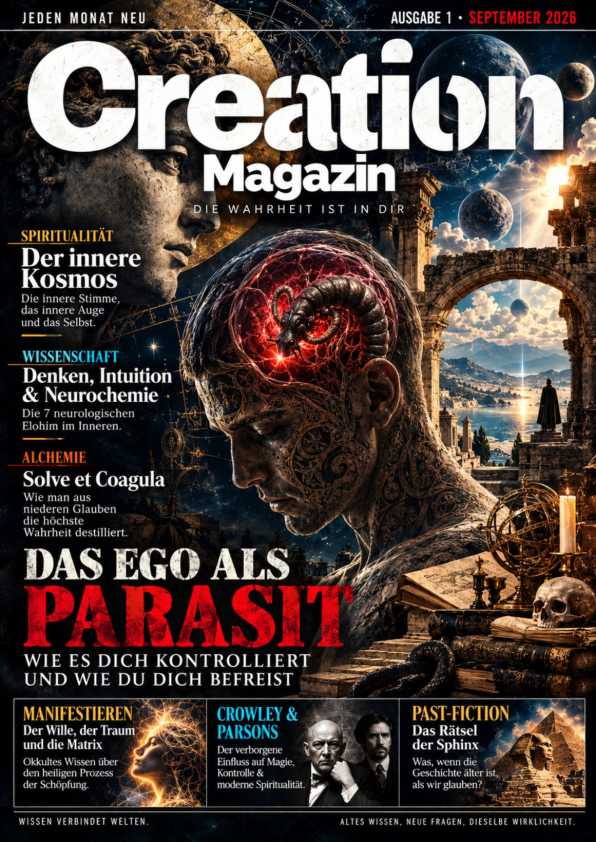
CREATION explores that problem at greater length in True Will — Who Decided What You Want?.
The Dangerous Confusion of Intensity with Truth
Many people know the sensation of a decision that feels almost physically right. Suddenly memories, arguments, and expectations fall into place and become one overwhelming certainty. That may be a genuine insight. It may also arise from powerful fear, group pressure, infatuation, or long-established habit.
The strength of a feeling cannot by itself establish the quality of what the feeling tells us.
Someone is absolutely convinced that they must always manage everything alone. They call it willpower. Perhaps it is competence. Perhaps it is also a learned fear of asking for help. Both may be present at once.
Someone else declares that they possess an iron will and will never yield. As a stance against injustice, that may be admirable. As a response to evidence of their own mistake, the very same stubbornness may be nothing more than obstinacy.
A will that may never examine its reasons is not automatically more mature than a wavering one. Sometimes the ability to change a decision is the more demanding form of resolve.
The Hard Counterquestion: Does Every Doubt Become an Excuse?
Endless analysis of the will carries its own danger. Examining motives can become the perfect reason never to begin.
First I must find out whether this decision truly belongs to me. First I must understand whether this job is my calling. First I must check whether my longing is only conditioning. First I must achieve absolute certainty.
Life will not wait for a finished metaphysics.
A craft is learned through work, not only through complete understanding of one's motivation. An apology may have to be made today. Someone may need your help before you know whether your helpfulness is entirely unselfish.
Here is the second distinction: examination matters. But examination can turn into avoidance when there is no point at which action is permitted.
An honest philosophical text about will must not ignore this.
CREATION: The Will Has Three Places
From these tensions, CREATION develops its own working model. It is not a historical synthesis of Schopenhauer, Nietzsche, and Crowley, and not an empirically validated theory of personality.
First: the decision. You formulate an intention. It may be well-founded, confused, or contradictory. Here we see what you say about what you want.
Second: the action. An intention encounters time, the body, other people, habits, and resistance. Here we see not what you claim, but what you actually do.
Third: the revision. You examine the consequences and, where necessary, change your approach or your goal. Here we see whether your decision is still capable of learning.
This model avoids two extremes. It does not declare every spontaneous impulse the true core of a person. Nor does it claim that only relentless self-discipline has value.
A decision without action remains a claim. Action without examination can become blind. And revision without a next step becomes an endless loop.
An Experiment That Requires No Heroes
Choose one small thing you have been postponing: answer a message, sort out a bill, read for ten minutes, clarify an important question. No upheaval, no test of courage.
Write three lines:
1. What do I intend to do? Describe the action precisely enough to know afterwards whether it happened.
2. What might prevent me? Note at least one external and one internal condition, without turning either into a moral verdict.
3. How will I evaluate it? Decide what would count as a useful result and what could justify a change of course.
Then begin. Notice what actually happens between planning and carrying out the plan.
This is a reflection exercise, not therapy, a guarantee of success, or proof of a metaphysical True Will.
The Person Sitting Beside the Phone
Return to the beginning. The task is still on the table. The phone is within reach.
Perhaps the person now works for ten minutes. Perhaps they discover they lack information necessary to complete the task. Perhaps they realise the obligation was poorly framed and a conversation is needed.
None of those outcomes automatically reveals a mystical destiny. But something important has shifted. The person no longer judges themselves solely by the volume of their inner command. They examine the conditions of the decision, the reality of the action, and the possibility of correction.
Schopenhauer would not thereby grant them ultimate freedom. Nietzsche would hardly allow the process to be reduced again to one simple atom of will. Crowley's religious concept of True Will remains another question entirely.
Yet something survives the disagreement:
Will does not reveal itself merely in how loudly you say “I want”. It becomes visible in whether you establish a testable connection between your words, your actions, and your responsibility.
Sources and Historical Distinctions
• Arthur Schopenhauer: The World as Will and Representation, Book II, especially § 18; and On the Freedom of the Will (1839). See also the scholarly overview in the Stanford Encyclopedia of Philosophy.
• Friedrich Nietzsche: Beyond Good and Evil (1886), § 19. The passage challenges the apparent simplicity of willing. German primary text available through Project Gutenberg.
• Andreas Urs Sommer: historical-critical commentary on Nietzsche's Beyond Good and Evil, published in connection with the Heidelberg Academy of Sciences and Humanities.
• Aleister Crowley: Liber II — The Message of the Master Therion (1919), distinguishing passing gratification from the thelemic idea of True Will.
• Stanford Encyclopedia of Philosophy: “Free Will”, an overview of competing philosophical accounts of freedom of the will.
Editorial distinction: The three-place model (decision, action, revision) and the practical exercise are CREATION's own interpretations, not an original doctrine shared by the three writers or a clinically validated method.



Comments