
THE COURAGE TO DOUBT — Socrates, Certainty, and the Limits of Intuition

At first it feels like clarity. You finally understand why your relationship failed, why an opportunity disappeared, why people misunderstand you. The explanation fits everything. Each new detail seems to confirm it. You do not feel confused anymore.
Then someone asks an irritating question: what evidence would make you change your mind?
If the answer is “nothing,” you may have stopped investigating. What feels like freedom from doubt can become dependence on an explanation.
Socrates and the knowledge of a limit
In Plato's Apology, Socrates recounts examining someone reputed to be wise and discovering an uncomfortable difference between them. Both lacked knowledge on the matters under discussion, but only one was willing to recognize that lack. Socratic wisdom, in this passage, does not mean possessing a secret answer. It means refusing to counterfeit knowledge one does not have.
This is easily turned into another slogan: “I know that I know nothing.” But the original drama is more demanding. Socrates tests reputations, arguments and his own assumptions through encounters that can make him unpopular. Doubt is not decorative modesty. It has consequences.
The point is not that nothing can be known. It is that our confidence must remain accountable to the reasons we can give.
A belief that cannot be challenged cannot mature
John Stuart Mill develops a related concern in chapter 2 of On Liberty. Even when an accepted view is true, he argues, it can become a lifeless formula if people are never required to defend it against serious criticism. Discussion does not simply tolerate dissent; it keeps reasons alive.
Consider a conviction about another person's motives. You have seen a pattern before and believe you recognize it immediately. Perhaps you are right. Yet every interpretation you make after that point has two jobs: understand what is happening and defend your first conclusion. The second can quietly replace the first.
That is why agreement feels easier than inquiry. An echo offers relief. A genuine question risks taking something away from you: certainty, superiority, perhaps the story that has given order to a difficult period.
The promise and danger of intuition
Intuition is often described as inner wisdom. Sometimes it is the quick recognition of patterns learned through long experience. A seasoned craftsperson may notice a problem before being able to explain every detail. But the same speed can also belong to prejudice, fear, wishful thinking or a memory we have not examined.
An inner signal deserves attention, not automatic authority. Instead of asking “Do I feel this strongly?” ask three more useful questions: what have I actually observed; what competing explanation could fit; and what would I check before acting?
These questions do not make life mechanical. They allow feeling and judgment to cooperate without forcing either to pretend it is infallible.
The difference between self-knowledge and self-absorption
Looking inward can clarify motives, but it can also turn into an endless examination of our own specialness. We may become fascinated by the person who is supposedly doing the transforming. Every weakness becomes a hidden gift; every disagreement becomes proof that others cannot understand our depth.
A tougher form of self-knowledge welcomes disconfirmation. It notices when an apology is due. It recognizes that some experiences are ordinary, not signs. It distinguishes a legitimate aspiration from the flattering story we tell about having one.
This is where philosophical inquiry meets everyday conduct. If a belief makes you kinder only toward people who agree with you, how wise is it? If a spiritual practice increases certainty but diminishes curiosity, what exactly has grown?
An experiment without a verdict
Choose a conviction you return to often—about success, failure, relationships or who you are. Write a paragraph in its defense. Then write the strongest good-faith case against it, as though the person disagreeing with you were intelligent and sincere. Finally, name one real-world observation that would help distinguish the two.
You do not have to surrender the belief. The point is to learn whether you hold it deliberately, or whether it has begun to hold you.
The larger conversation
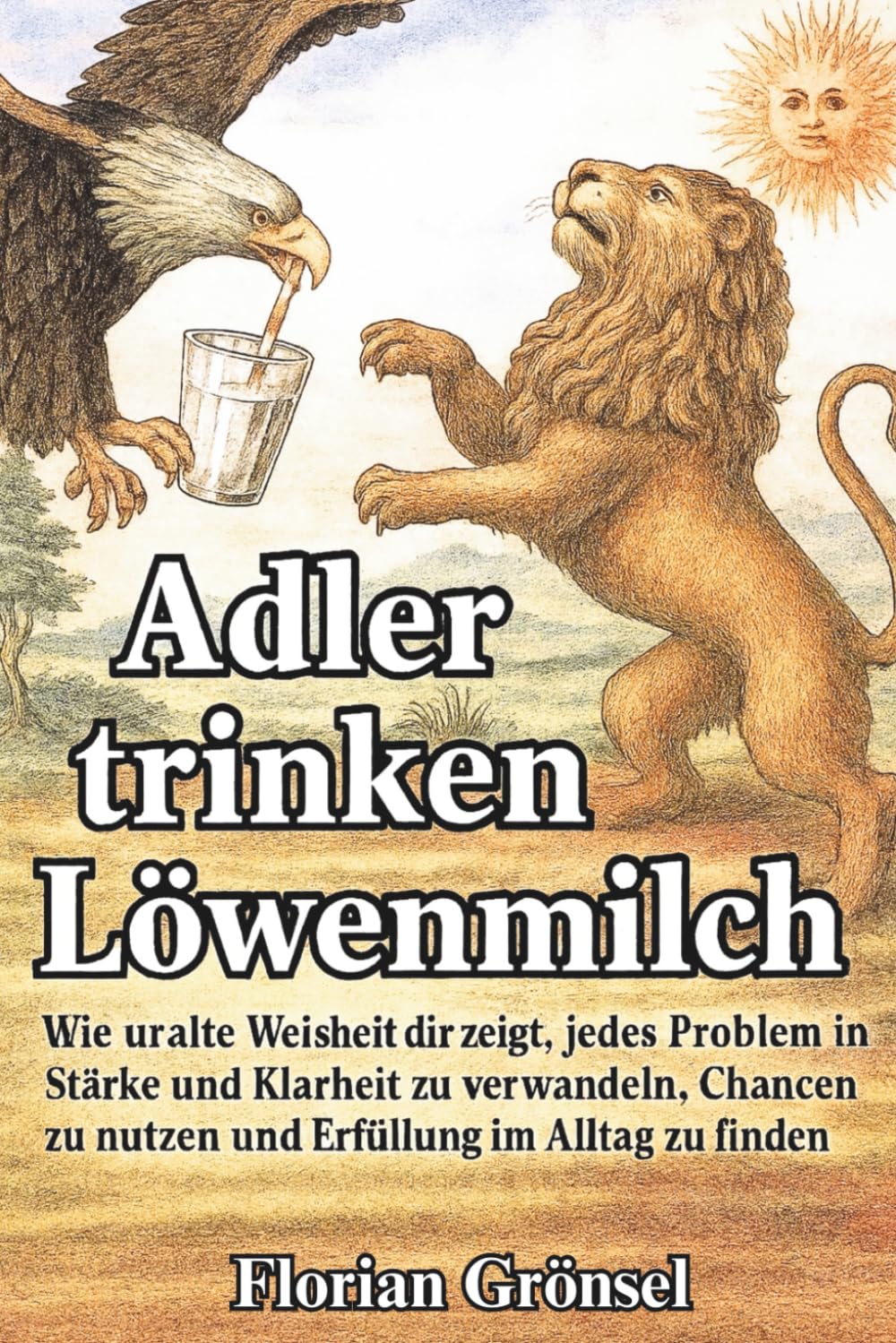
When Eagles Drink Lion’s Milk explores intuition, clarity, courage and self-knowledge without presenting certainty as a prize. Across twenty-two reflections, the English edition invites readers to examine not only what they believe about life, but the habits of thought through which they arrived there.
Sources and further reading
Continue reading with CREATION
These essays are part of the CREATION knowledge universe. Florian Grönsel’s English book When Eagles Drink Lion’s Milk: Finding Courage, Clarity, and Meaning in Everyday Life brings the questions into twenty-two personal reflections. The Kindle edition is listed on Amazon.com; purchasing availability can depend on marketplace and location.

More from CREATION: CREATION bookshop · The Eagle and the Lion — introductory essay


Comments